

Research Archives - Page 3 of 6 - Cromwell Property Group
A person typing on a laptop

Learn

Home Research Page 3
May 22, 2022

Supply chain adaptation will boost Australian occupier demand
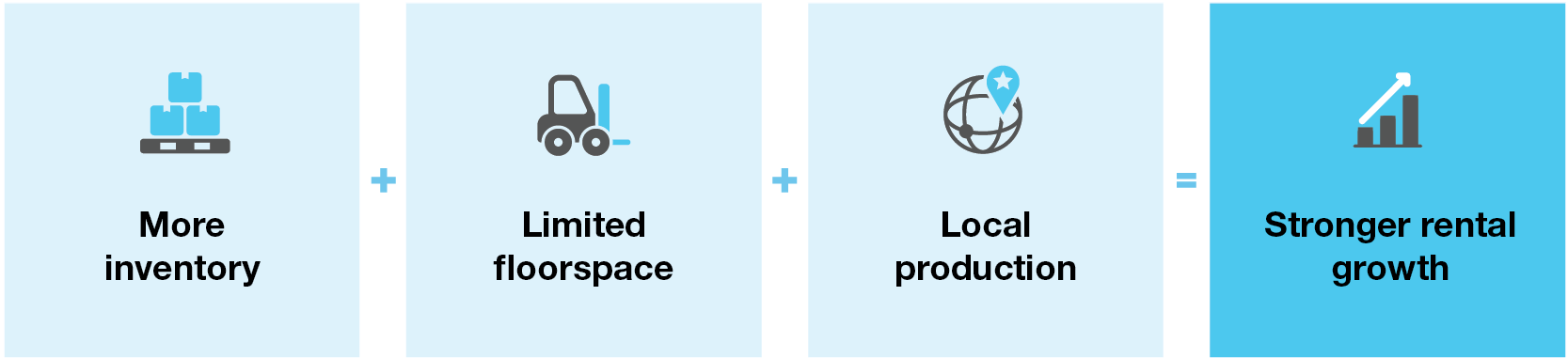
A retreat from global supply chains is underway as businesses seek to maintain greater local inventory and production capacity. As global logistics networks are strained, businesses cannot yet fully enact their re-organisational plans despite a strong desire to do so. This implies momentum has yet to build and will only accelerate.

More local inventory and production means more physical space required. With logistics and industrial/light industrial floorspace supply already at record lows across Australia, intensifying occupier demand will create even stronger rental impetus.


From global to local: how supply chains are changing

One of the most immediate and lasting impacts of the COVID-19 pandemic has been supply chain disruption. Erratic swings in demand – toilet rolls and computer monitors one minute, bicycles the next – were exacerbated by logistics interruptions ranging from congested ports and the Suez Canal blockage, labour shortages across the transportation industry and bans on certain exports deemed to be of national importance.

The extent of the disruption reflects the international nature of supply chains which first emerged in the 1980s enabled by new technology and globalisation.

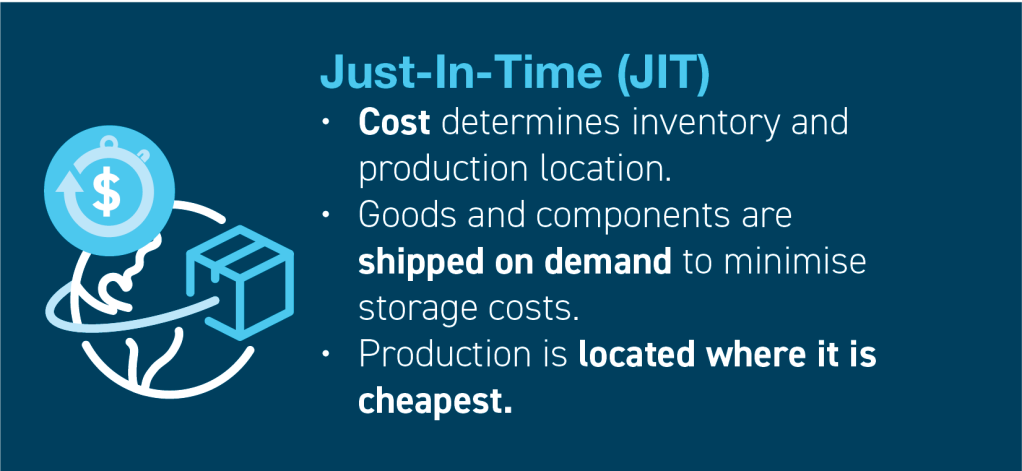
A ‘Just-In-Time’ (JIT) supply chain philosophy in which decisions on where to source, manufacture and store stock are made purely on a financial basis has become standard practice. Goods and components are shipped on demand just before they are needed to minimise storage costs and optimise working capital. Production facilities are located in emerging economies with lower labour and operational costs.

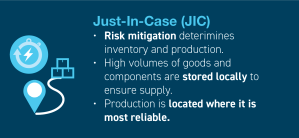
The downside of JIT networks is that they rely on stability and do not cope well with sudden, unexpected change. Rapid demand fluctuations, shipping backlogs or border issues erode their functionality and undermine the ability of businesses to fulfil orders. Reliably mitigating disruption means prioritising resilience over cost, with higher volumes of inventory being stored and production being undertaken locally where it can be better guaranteed. This is the ‘Just-In-Case’ (JIC) approach, the benefits of which have been viscerally demonstrated by the pandemic and, as a result, a mass pivot towards it is underway.
A global survey of senior supply-chain executives by McKinsey, a management consultancy, in Q2 2020 found that 93% planned to make physical changes to their supply chains to ingrain flexibility, agility and resilience in response to the pandemic1. Multiple initiatives were planned including diversification of raw material sourcing, increasing critical inventory and nearshoring production and suppliers.

A survey of global CEOs by KPMG, a professional services firm, in Q3 2021 established that ‘supply chain risk’ was jointly ranked as the top threat to business growth alongside cyber security and climate change risk2. It was ranked second in 2020 reflecting the growing awareness of, and concern with, supply chain risk. There was a marked 10 percentage point increase in CEOs rating this as the biggest threat. Supply chain adaptation is clearly at the forefront of corporate agendas.

Rising risk and uncertainty: why change is occurring

Multiple factors are combining to foster rapid supply chain adaptation. The pandemic brought urgency to the need for change, ensuring that all businesses understand how fragile supply chains are and the need to ingrain resilience. Global supply chain pressure rose immediately and remains near a record high (Figure 1). This reduces business output, erodes profitability and adds to inflation.

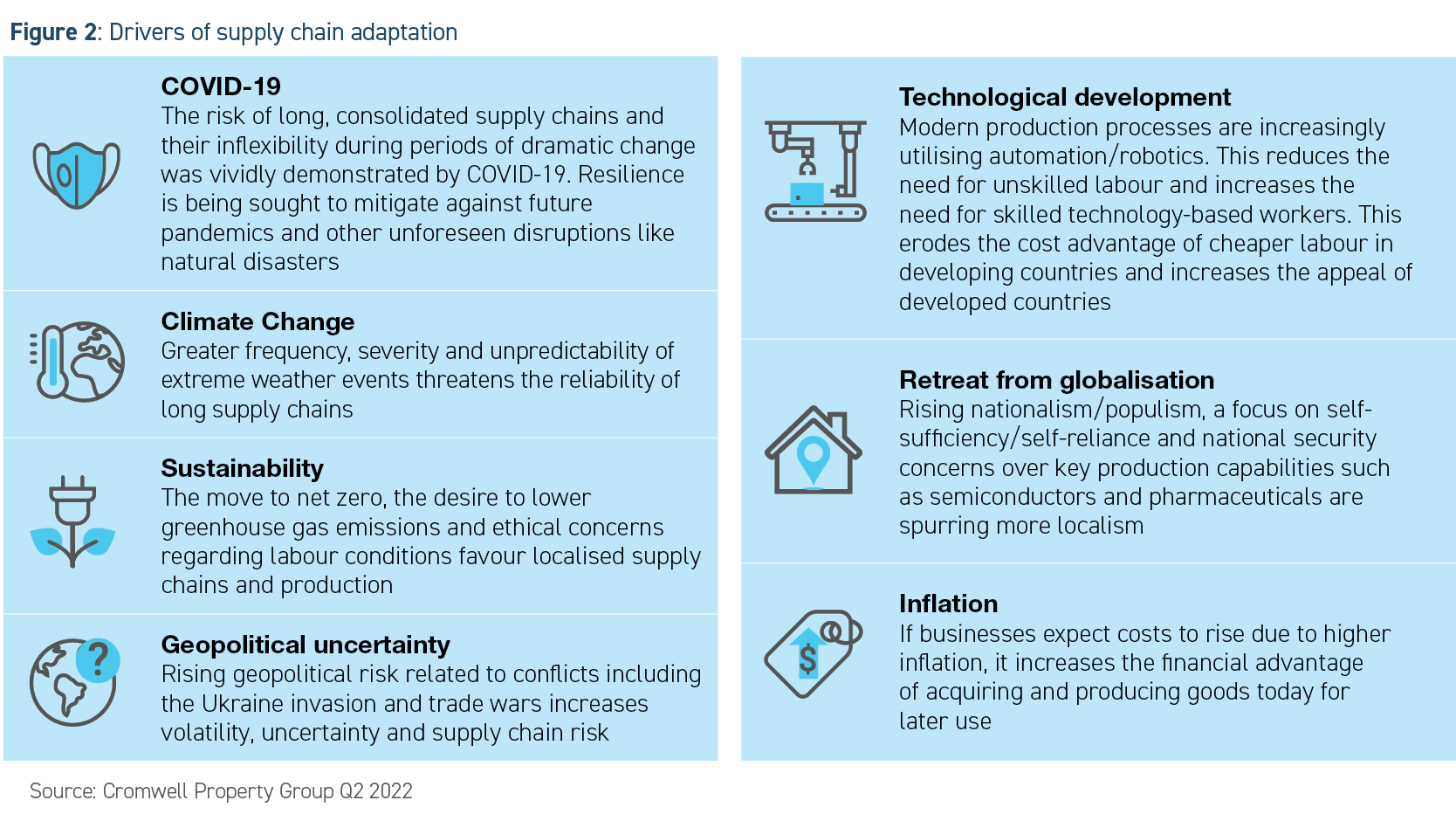
As with other structural changes though, the pandemic merely accelerated a pre-existing trend rather than creating it. Supply chains were becoming more localised and manufacturing activity was already nearshoring, but the pace was much slower. The ability for supply chains to adapt is being fuelled by a variety of drivers (Figure 2).

Nascent stage: adaption is only just starting

The trend towards JIC is only starting to gather momentum. Because supply chains remain heavily disrupted and are likely to remain so for some time, it is difficult for companies to satisfy existing demand, build inventory and relocate production concurrently.

It takes time to recalibrate supply chains which have developed over decades. It takes even longer to relocate production facilities and increase output sufficiently to replace offshored factories. However, it is far quicker to store greater inventory than relocate factories.

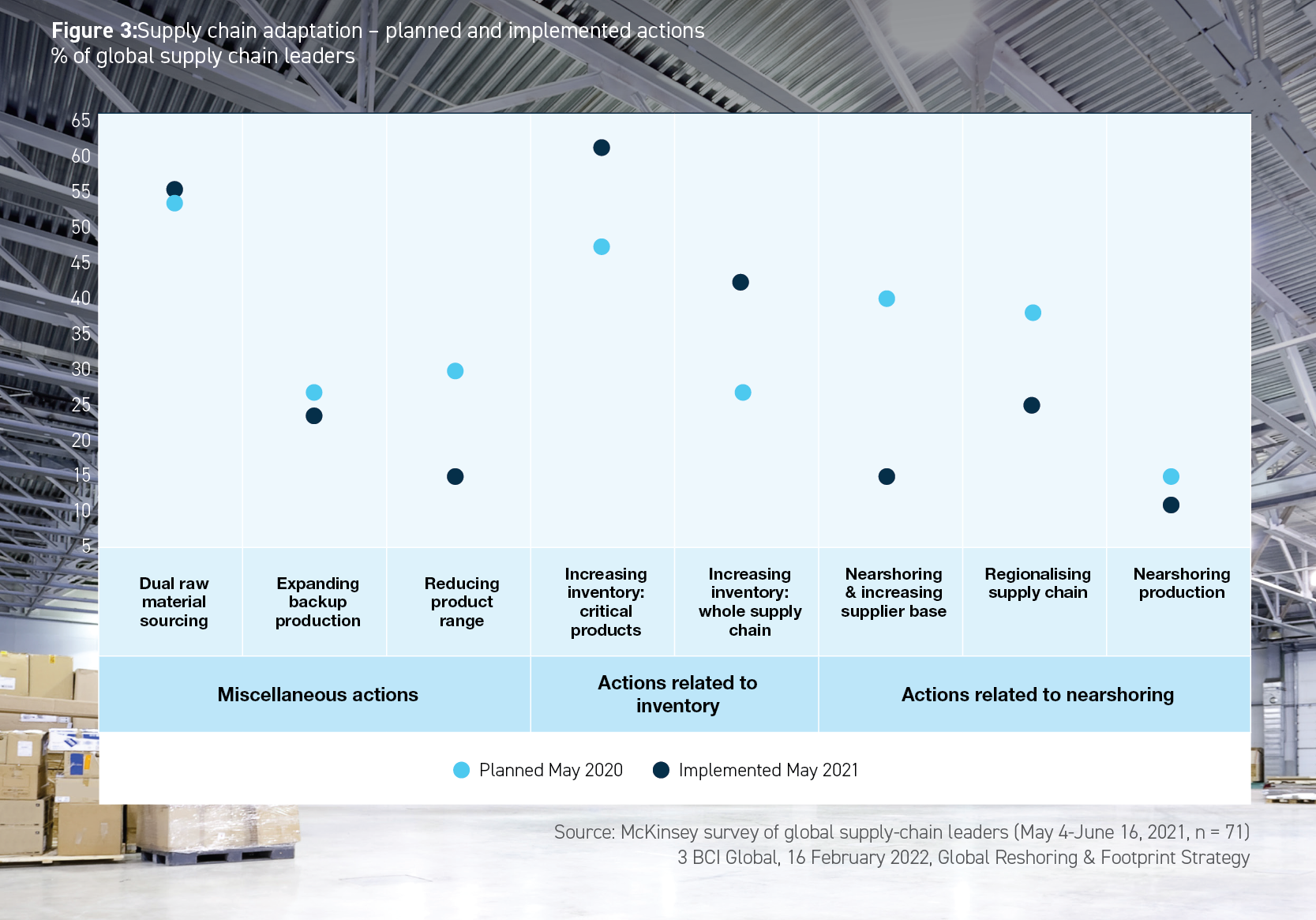
The McKinsey survey was undertaken in Q2 2020 and Q2 2021. Analysis of the results clearly shows that whilst many companies planned to reshore activity in Q2 2020, few had done so a year later. By contrast, far more companies had increased their inventory by Q2 2021 than the number of those that had anticipated doing so in Q2 2020 (Figure 3).

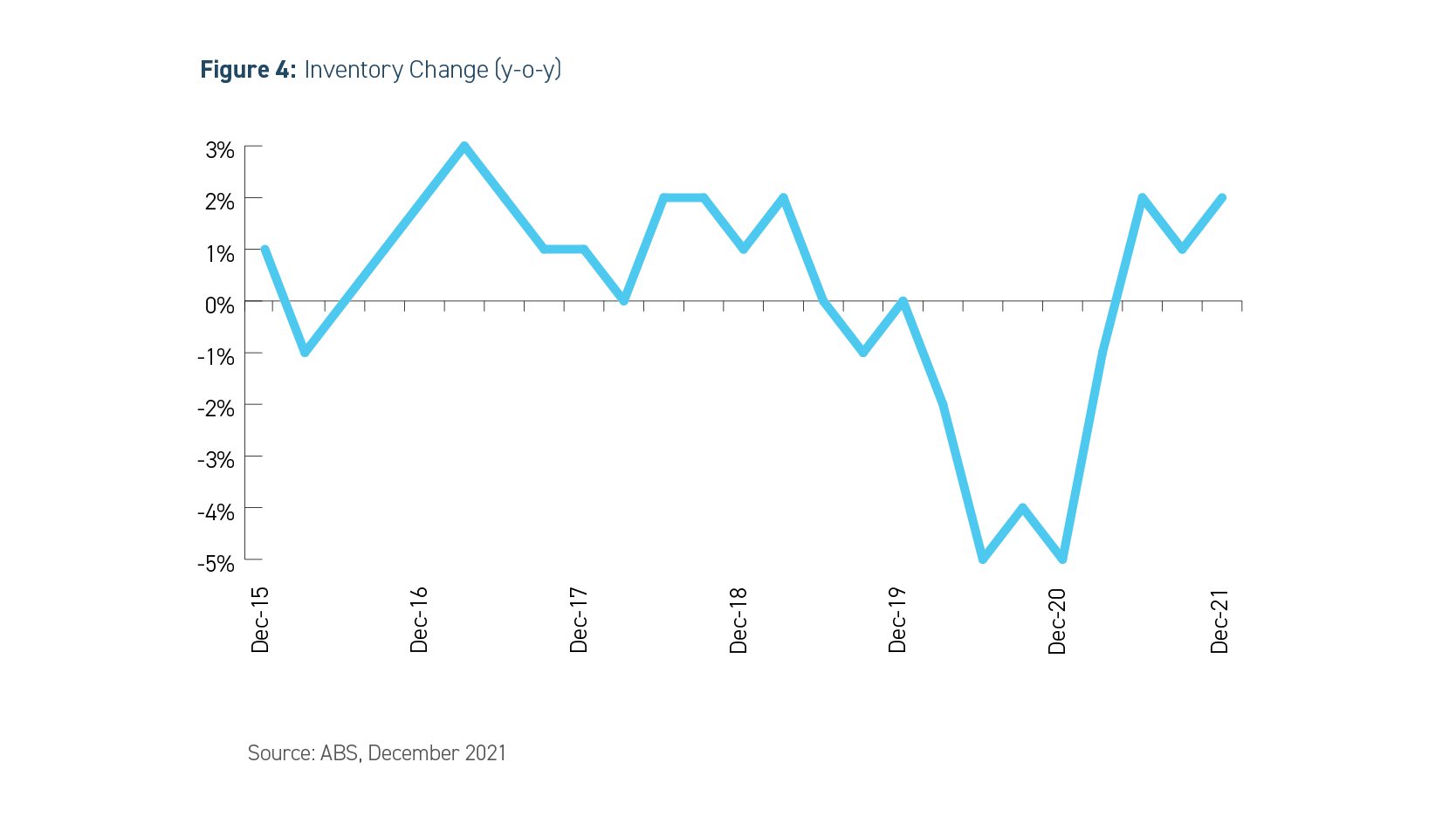
Despite businesses increasing inventory, stock levels remain depleted. ABS data on business inventories indicates these fell significantly after March 2020 as the pandemic hit (Figure 4). Whilst proportionally inventory levels have improved in 2021, this reflects base effects given the severity of the reduction experience in 2020. Australian inventory remains extremely depleted by historical standards.

Despite businesses increasing inventory, stock levels remain depleted. ABS data on business inventories indicates these fell significantly after March 2020 as the pandemic hit (Figure 4). Whilst proportionally inventory levels have improved in 2021, this reflects base effects given the severity of the reduction experience in 2020. Australian inventory remains extremely depleted by historical standards.

A Q4 2021 global survey of 125 senior level executives in the life sciences, machinery/automotive and consumer durable goods sectors by BCI Global, a supply chain consultancy, found that 85% rated “shortage of components/commodities/raw materials” as the biggest supply chain challenge today3.

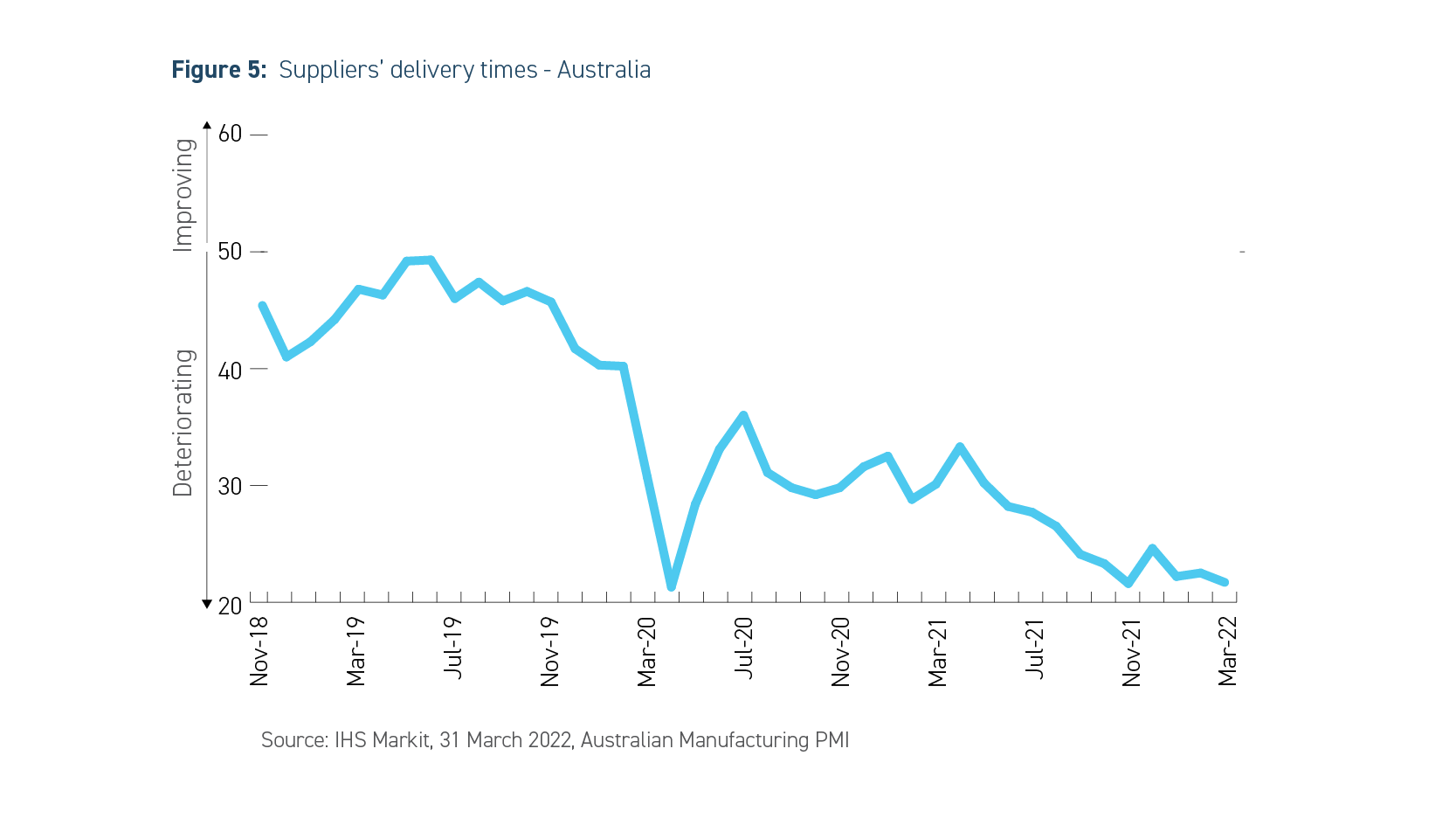
Manufacturing suppliers’ delivery times are at a multi-year low which prevents companies from building sufficient inventory (Figure 5). It will be some time before these times shorten given the extent of the backlog which will prevent significant inventory increases in the immediate future.

Meaningful scale-up of reshored production capacity is unlikely to be achievable until the medium term. Significant planning is involved, given the dramatic reorientation of process and supply chains that this involves as well as the high capital investment. That is why there has been little evidence of nearshoring production to date despite business indicating that they plan to do so.

Nearly 90% of McKinsey respondents stated that that they expect to pursue some degree of regionalisation during the next three years. This is corroborated by the BCI Global Survey which established that 60% of respondents plan to reshore activity within the next three years.

The implication of this analysis on the extent of supply chain adaptation and manufacturing nearshoring is that this recalibration is at a very early stage. It is only just starting to gather speed and it is a trend with longevity.

Significant floorspace demand: occupier demand will escalate

Greater inventory and reshored production requires physical floorspace, and this greatly favours commercial real estate operators. Occupier demand for logistics, warehousing and industrial/light industrial stock will rise, compounding the existing supply/demand imbalance in favour of landlords.

In terms of specification, storage space requires little other than volume. This may mean that demand is focused on more affordable secondary logistics and warehousing space with height. Transport connectivity is likely to be a locational driver. Space near major transport nodes such as seaports, airports and multi-modal terminals may be most desirable.

Demand emanating from reshored production facilities is expected to be focused largely on industrial/light industrial space. Whilst modern production has lower labour requirements than in the past, access to skilled labour is still needed. This suggests demand will be focused near cities or other clusters offering ready access to specialist technical or manufacturing labour.

Production facilities typically rely on support from suppliers and logistics subcontractors. As such, the emergence of new reshored production facilities will stimulate broader occupier demand in their surrounding localities. They are demand catalysts.

A rising tide lifts all boats: stronger rental growth is the most likely outcome

Analysis from a range of data sources and forward-looking business survey indicators suggest that Australia is on the cusp of experiencing a sustained build-up of inventory storage and a transition towards reshored production. This will lead to substantial and prolonged demand for additional logistics, warehousing and industrial/light industrial space.

A rising tide lifts all boats, even if demand is concentrated on storage and focused on secondary stock and production demand on light industrial/industrial, it will still limit choice and reduce optionality for occupiers across all types of logistics and light industrial space. This is likely to intensify competition for space, exacerbate the existing supply shortfall and lead to stronger, more protracted rental growth.

Footnotes

1 McKinsey, 23 November 2021, How COVID-19 is reshaping supply chains
2 KPM, 1 September 2021, 2021 CEO Outlook
3 BCI Global, 16 February 2022, Global Reshoring & Footprint Strategy

DISCLAIMER
This material is prepared for discussion only and should not be relied upon for any other purposes. It has been prepared on a good faith basis but its contents have not been formally verified and no Cromwell entity or person accepts any duty of care to any person in relation to the information it contains. It should not be considered to be investment advice, marketing material or a promotion or offer of any Cromwell fund, product or services. Any person that wishes to invest in any Cromwell fund, product or services should refer to the relevant information or legal documents produced in relation to such opportunity before making any investment or other decisions. This document reflects the views of its author as at 9 May 2022.

A person typing on a laptop

Research and Insights

Home Research Page 3
April 7, 2022

Timber buildings – Truly sustainable real estate

In this special report, our Research and Investment Strategy team explore how timber buildings can be a critical part of the solution the real estate industry needs to mitigate climate change.

The report takes a deep dive into timber as a renewable building resource. Alex Dunn and Tom Duncan explore how using timber in new building construction can deliver positive environmental impacts and lead to truly sustainable real estate. They provide a balanced view of the benefits and challenges of timber construction; address some common misconceptions around its use and consider the advantages from an occupier and investor perspective. This is essential reading for all real estate stakeholders who are serious about enacting impactful environmental change.

The full report can be found by clicking here.

Timber-buildings-truly-sustainable-real-estate

A person typing on a laptop

Research and Insights

Home Research Page 3
March 8, 2022

German logistics – Diversify for performance

Michael Bohde, Head of Germany, Cromwell Property Group


German logistics is hot. Occupational activity has been record-breaking as rising ecommerce penetration and the shift towards supply chain resiliency has supported demand. According to our calculations an additional two million sqm of logistics space alone will be needed in Germany over the next five years to accommodate ongoing growth. Given land supply is highly constrained, this bodes well for future rental growth prospects.

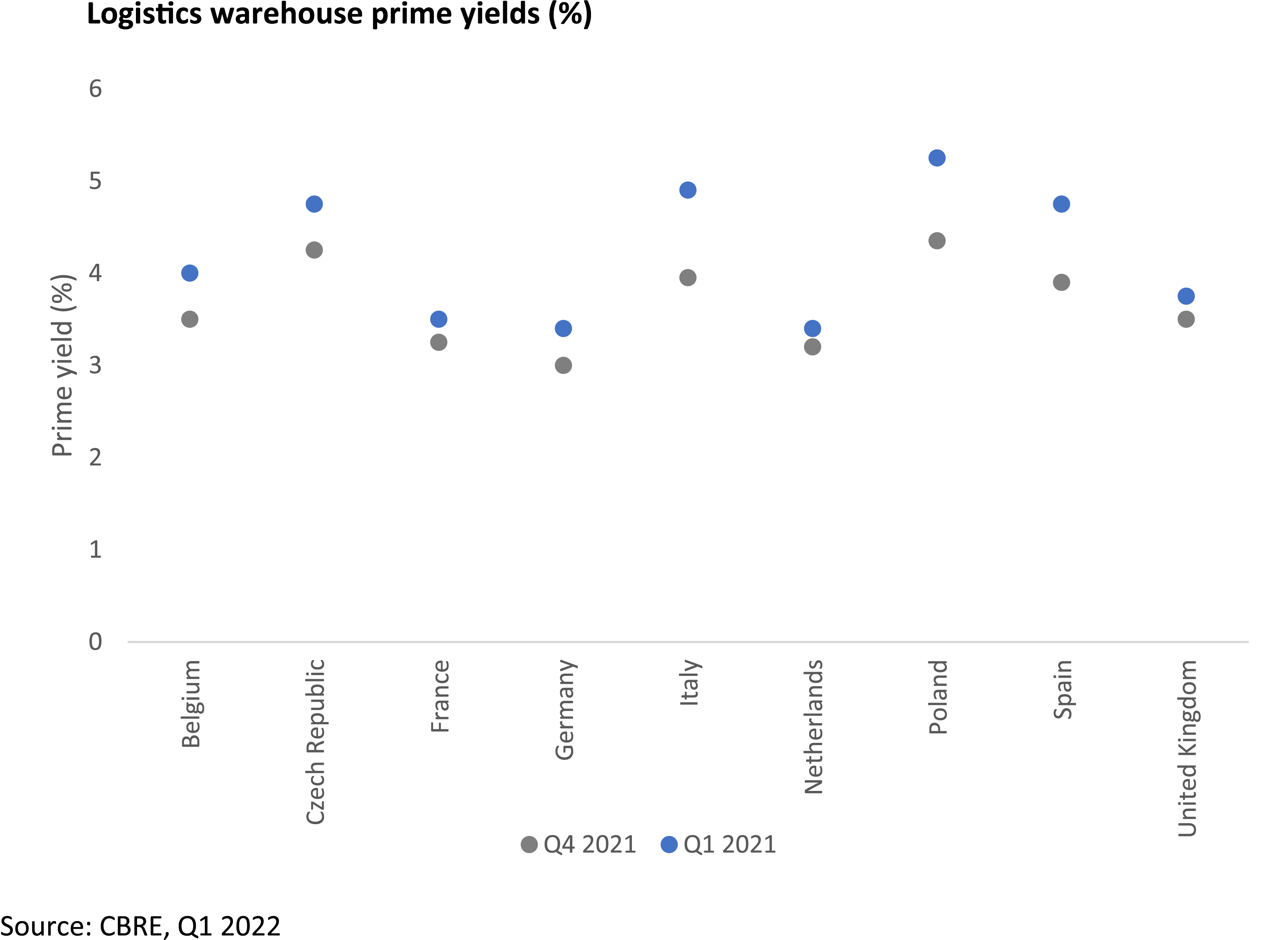
Reflecting this, investors are acquisitive. Last year some €28bn was sunk into European logistics according to RCA. German logistics/ light industrial transaction volumes in 2021 equated to €9.2bn according to Colliers or €10bn according to CBRE. With so much capital chasing such limited stock, yields are under pressure. Over the last year prime logistics yields have compressed by 40 basis points to reach 3.0% in Q4 2021 according to CBRE, and if their forecasts prove correct further moderate sharpening is likely.

/Logistics-warehouse

This leaves many investors pondering how they can benefit from the sectors growth prospects without compromising on well-priced entry yields. In our view, informed investors have two routes in particular to secure more value: increase the light industrial allocations or gain pan-European diversification.

Light industrial shift

Light industrial stock comprises space used for manufacturing, production activities such as part assembly and repackaging or research and development. Typically light industrial has higher office content than logistics stock and may comprise smaller assets or multi-let tenancies. Like logistics it benefits from exposure to cyclical economic and structural growth in online retail and supply chain recalibration but at more compelling entry prices.

Light industrial accounts for a large proportion of German industrial and logistics supply. Much of this is situated in urban areas where land competition is intensifying due to urbanisation. This underpins land value and offers future upside potential from densification for either co-located light industrial/logistics with other mixed-uses, or potential conversion to other uses entirely such as residential. This has the potential to deliver better performance.

Unlike logistics though, light industrial stock is far more differentiated and bespoke to the occupier and purpose. To acquire stock with resilient income and growth potential, investors must apply a granular approach to stock selection. Although granularity is needed, the right specialist can still build scale quickly, comparable to a logistics portfolio. Partnering with investment managers who understand local markets, are well connected to occupiers and can make informed decisions is vital.


Logistics Pan-European diversification

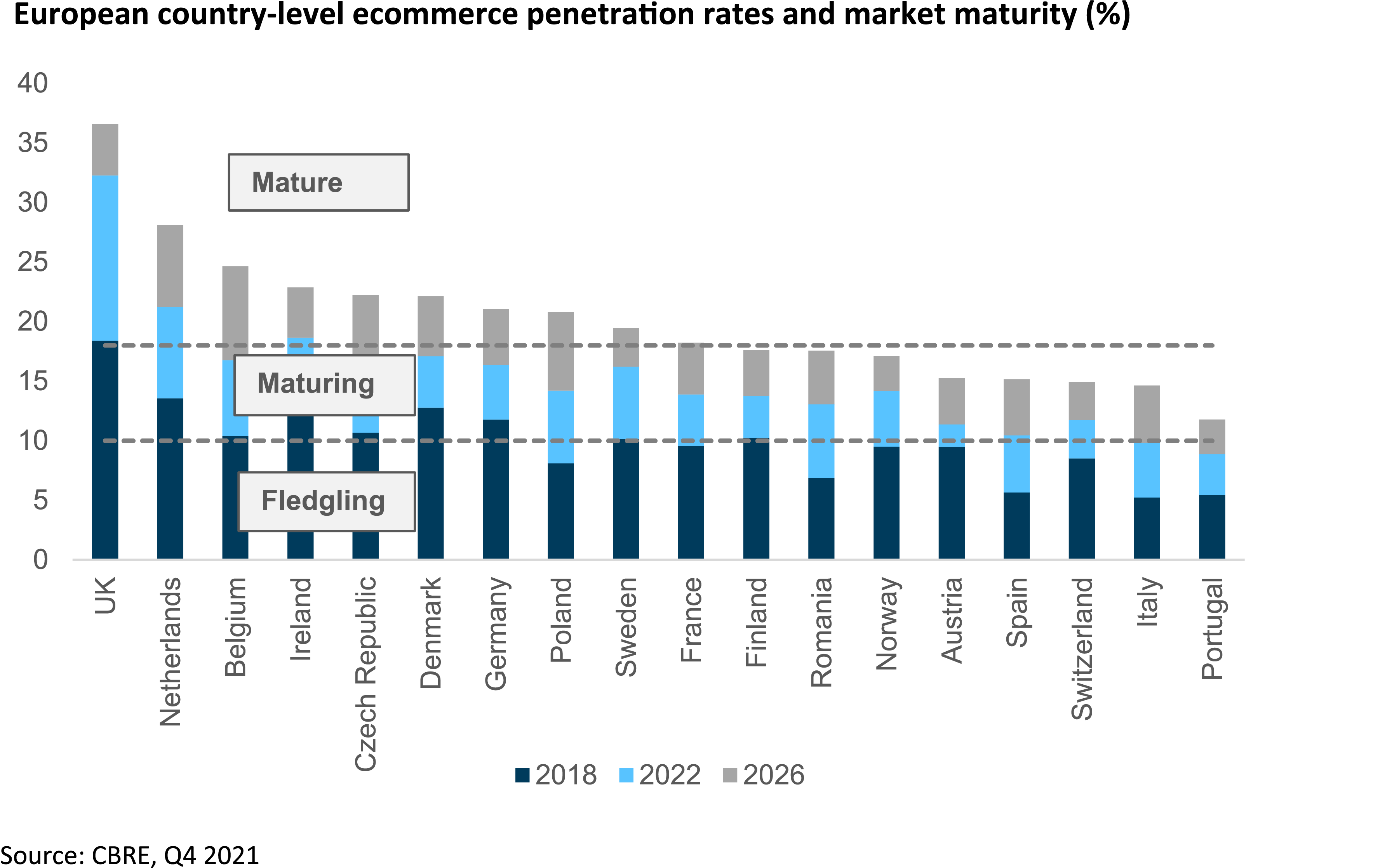
Another option for distribution-seeking investors is to expand into other higher-yielding European markets. Prime logistics yields of 4.25% in the Czech Republic, 4.35% in Poland and 3.95% in Italy are clearly appealing relative to Germany (figure 1). Occupier demand for quality stock in these markets is rising and land supply in the top locations is tight.

Not only will pan-European diversification bolster distributions, but it also spreads income risk by gaining exposure to assets and occupiers subject to different country dynamics. This reflects both the unique economic prospects of each European country and, of particular relevance to logistics performance, differing stages of online retail market maturity.

Countries with ecommerce penetration of below 10% of total retail spending are immature. Analysis from mature markets such as the UK and Netherlands demonstrates when penetration rises above 10%, logistics occupier demand also accelerates. The demand impetus typically proceeds faster than the supply response, especially given it is increasingly hard to find sites and gain permission for new logistics development, leading to rapidly escalating rents. Rental growth tends to endure when markets reach maturity above 18% penetration as occupiers seek to consolidate their distribution networks to maintain market share.

European-country-level-ecommerce

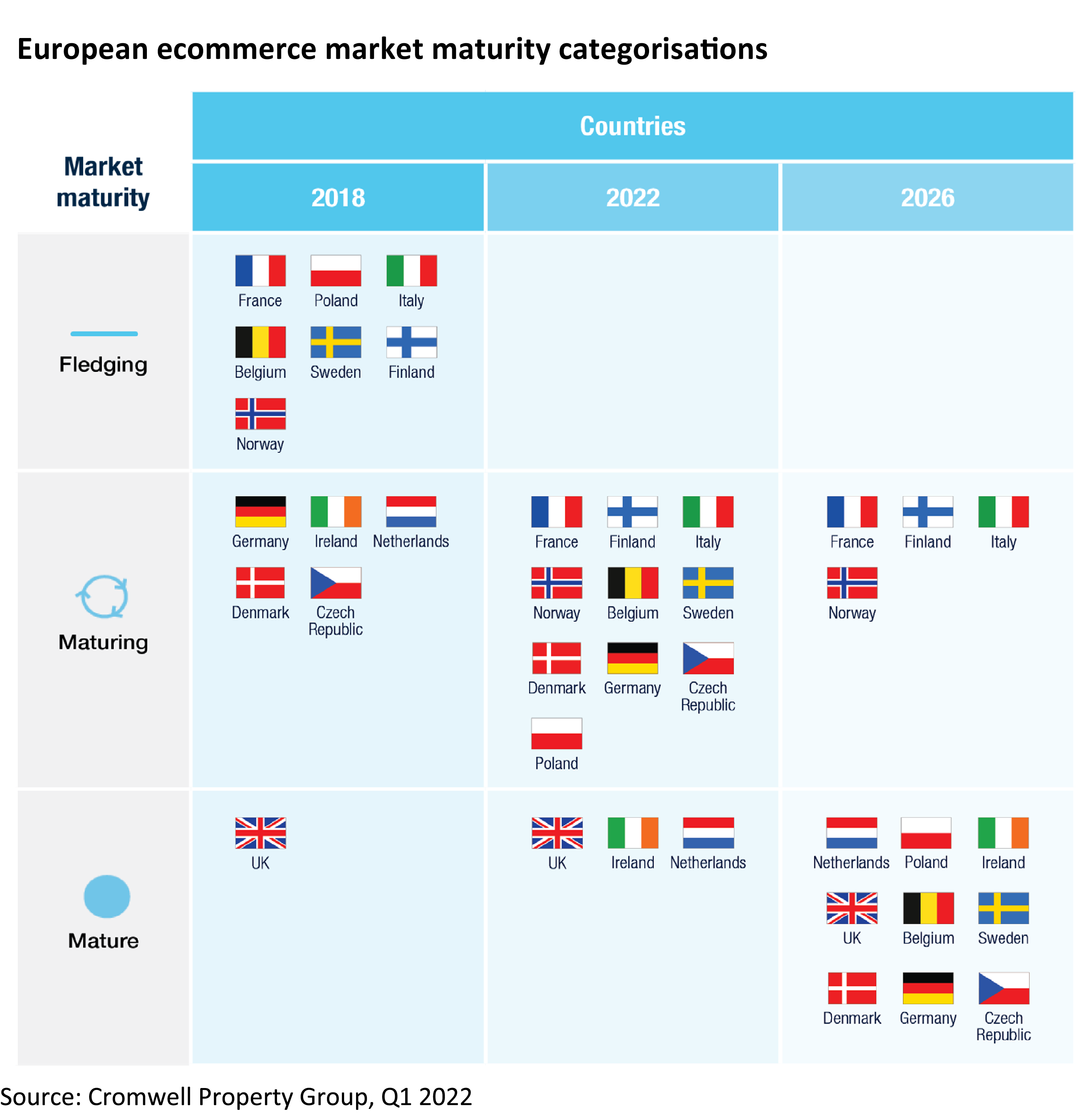
Many European countries have recently entered the maturing stage of ecommerce growth (figure 2). In addition to Germany (16% online penetration in 2022 according to CBRE) these include the large Italian (10%) and Central and Eastern Europe economies (14% and 17% in Poland and Czech Republic respectively). This bodes well for future rental growth prospects in these countries and those who invest there.

European-ecommerce-market

Wise pan-European diversification requires a robust understanding of local market dynamics. Whilst logistics stock is fairly generic, local country particularities have a significant impact on return prospects and requires granular market expertise in order to make informed decisions.

Broader allocation will deliver income

In summary, we expect that compelling long-term fundamentals in the logistics sector coupled with low distribution yields in core logistics will prompt a growing number of investors to diversify. Diversification will encompass acquiring higher-yielding light industrial stock in Germany which benefits from exposure to similar occupational drivers and often has underlying land value. It will include European diversification to gain exposure to stock likely to benefit from rapidly escalating occupier demand at more compelling yields. Such diversification also spreads risk and smooths income returns.

Effectively executing a diversification strategy of this nature requires partnering with an informed investment manager with a true pan-European presence. This is a sophisticated approach which relies upon detailed knowledge of evolving occupier demand and how that relates to real estate. Local markets must be thoroughly understood in order to understand their unique characteristics and identify the most attractive investment opportunities. Local relationships with landlords and occupiers will also help to maximise performance potential.

German-light-industrial

A person typing on a laptop

Research and Insights

Home Research Page 3
March 8, 2022

Welcoming all talents

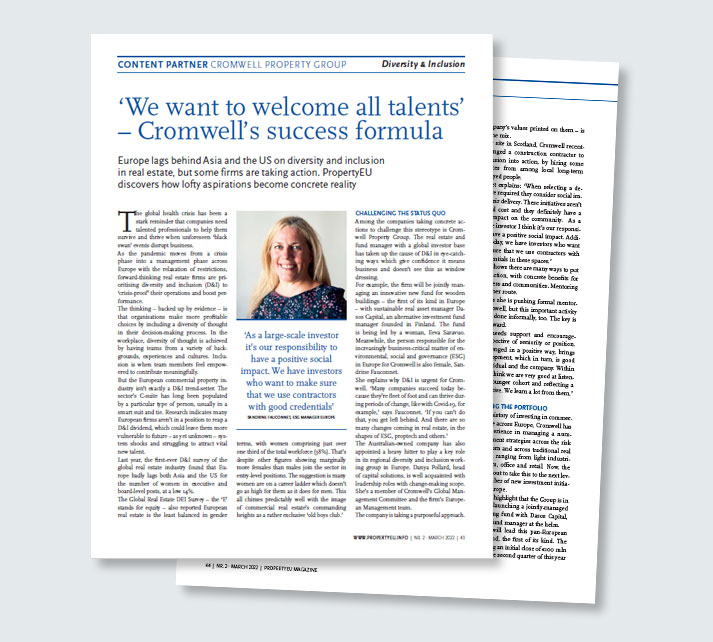
The global health crisis has been a stark reminder that companies need talented professionals to help them survive and thrive when unforeseen ‘black swan’ events disrupt business.

As the pandemic moves from a crisis phase into a management phase across Europe with the relaxation of restrictions, forward-thinking real estate firms are prioritising diversity and inclusion (D&I) to ‘crisis-proof’ their operations and boost performance.

Cromwell’s European Head of Capital Solutions, Danya Pollard , ESG Manager, Sandrine Fauconnet and Fund Manager, Eeva Saravuo recently spoke to PropertyEU about the importance of D&I in the real estate industry and the concrete steps Cromwell is undertaking to enable real change.

The interview can be found by clicking here.

Welcoming-all-talents

A person typing on a laptop

Research and Insights

Home Research Page 3
March 8, 2022

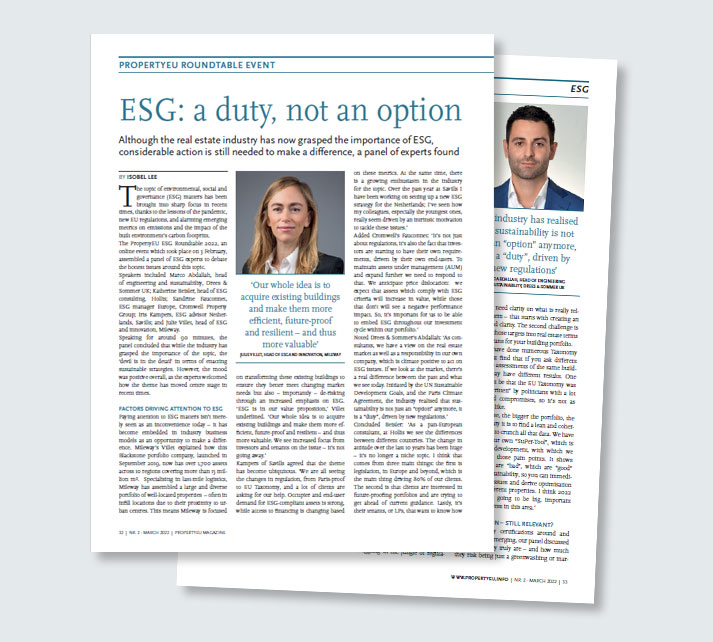
ESG: a duty, not an option

The topic of environmental, social and governance (ESG) matters has been brought into sharp focus in recent times, thanks to the lessons of the pandemic, new EU regulations, and alarming emerging metrics on emissions and the impact of the built environment’s carbon footprint.

Sandrine Fauconnet, European ESG Manager recently participated in PropertyEU’s ESG roundtable where she and a panel of experts agreed that although the real estate industry has now grasped the importance of ESG, considerable action is still needed to make a difference.

The full roundtable discussion can be found by clicking here.

ESG-a-duty-not-an-option

A person typing on a laptop

Research and Insights

Home Research Page 3
February 9, 2022

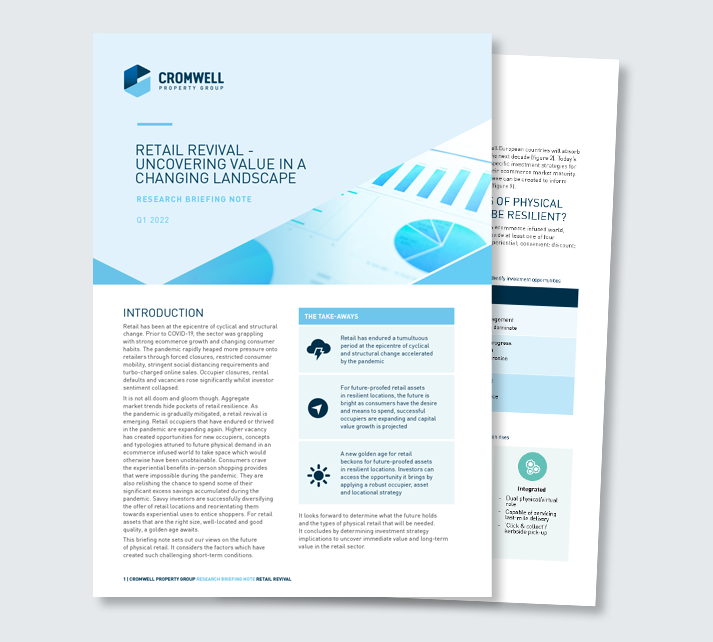
Retail revival – Uncovering value in a changing landscape

In Cromwell’s latest briefing note, Tom Duncan and Alex Dunn from the research and investment strategy team discuss the outlook for the retail sector. Whilst it has faced challenging short-term conditions, the prospects for physical retail that has a role in an e-commerce-infused world are bright. They discuss the investment strategy implications of this and the opportunities to uncover immediate and long-term value.

The briefing note can be found by clicking here.

Retail-revival-Uncovering-value

A person typing on a laptop

Research and Insights

Home Research Page 3
November 10, 2021

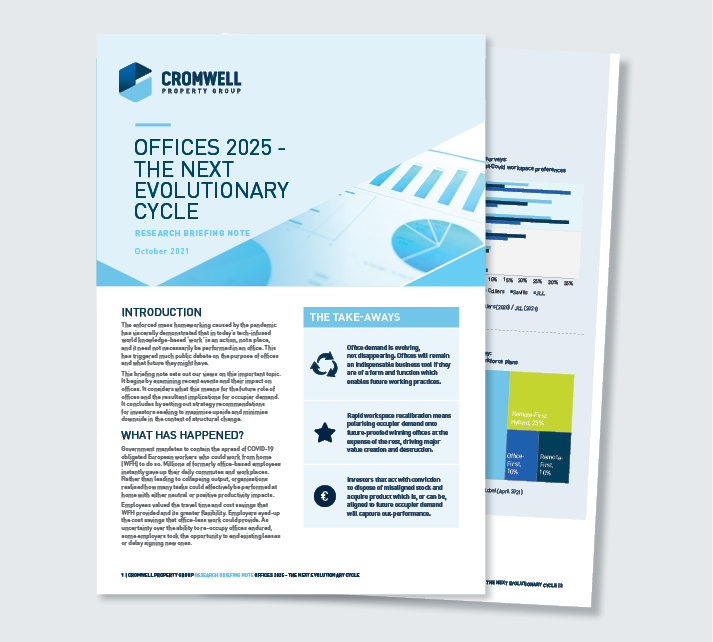
Offices 2025 – Research Briefing Note

The enforced mass homeworking caused by the pandemic has viscerally demonstrated that in today’s tech-infused world knowledge-based ‘work’ is an action, not a place, and it need not necessarily be performed in an office. This has triggered much public debate on the purpose of offices and what future they might have. In Cromwell’s latest briefing note, Tom Duncan and Alex Dunn from the research team examines these recent events, their impact on the sector and what this means for the future role of offices and the resultant implications for occupier demand.

The briefing note applied to the European office market can be found by clicking here.

The briefing note applied to the Australian office market can be found by clicking here.

Offices-2025-Research-Briefing-Note

A person typing on a laptop

Research and Insights

Home Research Page 3
October 22, 2021

Land scarcity and eco-issues cloud booming Dutch market

Lack of land and product, growing environmental constraints, and intense competition for plots and assets – the conditions for entering and expanding in the Dutch logistics market would appear far from ideal. Yet the droves of foreign developers and investors which have made their way to the Netherlands in recent years – and are still arriving – are evidence that there is still good business to be done. Head of Benelux, Wouter Zwetsloot recently participated in ‘The State of Logistics 2021: Logistics in the Netherlands’ panel discussion hosted by PropertyEU where he, alongside other industry experts, gave their insights why the investment case for Dutch Logistics remains rock solid.

The full article can be read here.

Land-scarcity

A person typing on a laptop

Research and Insights

Home Research Page 3
September 22, 2021

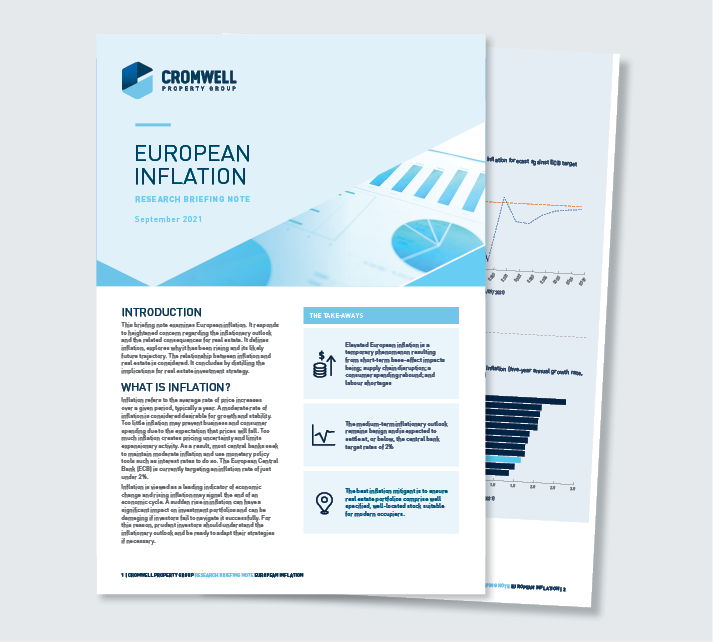
European Inflation – Research Briefing Note

In Cromwell’s latest briefing note, Tom Duncan and Alex Dunn from the research team examine European inflation. Together they discuss the heightened concern regarding the inflationary outlook and the potential consequences for real estate.

The full briefing note can be found by clicking here.

European-inflation

A person typing on a laptop

Research and Insights

Home Research Page 3
June 30, 2021

Engineered timber and the drive for more sustainable buildings

Alex Dunn


Climate change continues to shape the values, choices and investment decisions of the real estate industry.

In this article Senior Research Analyst, Alex Dunn, discusses how advances in engineered timber and construction are allowing asset owners to substantially improve the environmental performance of their buildings, while simultaneously, also meeting investors requirements for capital to be deployed in a more sustainable way.

Real estate positioned to reduce carbon emissions

Real estate accounts for approximately 36% of global energy consumption and 40% of total direct and indirect CO2 emissions, according to JLL. Left unchanged, the global trend towards urbanisation and the ever-increasing demand for new building stock will see these numbers continue to rise.

Unsurprisingly, the United Nations Environment Programme (UNEP) estimates that the real estate sector has the greatest opportunity to reduce greenhouse gas emissions compared to other industries, with potential energy savings estimated to be as much as 50% or more by 2050.

Government policies regulating the energy performance of new buildings are a powerful way of reducing emissions and are being introduced by an increasing number of countries. Leading cities are also introducing city-level regulation at a fast rate. Paris has a net zero carbon goal for 2050 and Amsterdam plans on being fully electric by the same time. The European Union has also established the ‘Green Deal’ in order to make the Eurozone climate neutral in 2050.

Legislation is increasingly likely to support sustainable assets with future regulatory and tax changes favouring sustainable investments and disadvantaging assets that cannot demonstrate compliance. It is notable that a survey carried out by Macquarie Infrastructure and Real Assets in 2020 found that 91% of global institutional investors expected to increase their level of investment into ‘sustainable’ real assets over the next five years.


Engineered timber buildings are becoming increasingly popular

In many countries, construction is a way to accelerate the economic recovery from the pandemic but it’s also a major source of carbon emissions. One way to bridge this issue is to increase the construction of more sustainable buildings.

Engineered timber buildings tick this box, and a combination of technological innovation, greater sustainability and reduced costs has seen the number of such developments increase globally.

Construction using concrete and steel is highly carbon-intensive, compared to trees which capture and store carbon dioxide as they grow, making timber a far greater climate-friendly building material. Timber construction also uses materials derived solely from managed fast growth plantations meaning construction is sustainable and does not rely on harvesting old-growth forests.

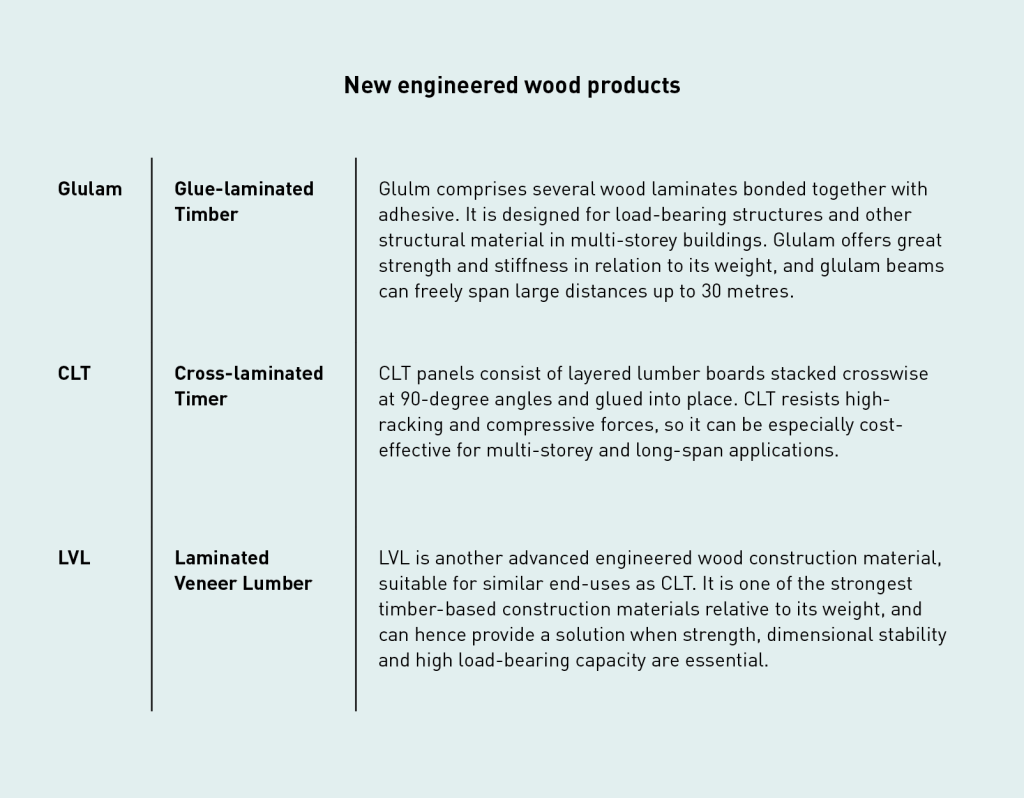
The rapid development in the market has been made possible by the technological breakthroughs of new engineered wood products, such as Glue-laminated Timber (Glulam), Cross-laminated Timber (CLT), and Laminated Veneer Lumber (LVL).


These engineered timber products are all versatile and support innovative flexible design and architecture approaches. It is this flexibility, combined with their increasing popularity and reduced construction time that has made engineered timber competitive with more traditional concrete and steel structures.


In Europe, the market for engineered timber construction has been growing by roughly 8% (€5 billion) a year and is expected to accelerate to €10 billion a year by 2030. These figures concern primarily multi-storey buildings, however, and with the inclusion and addition of wooden frame buildings and/or detached houses, the size of the investible market increases significantly.

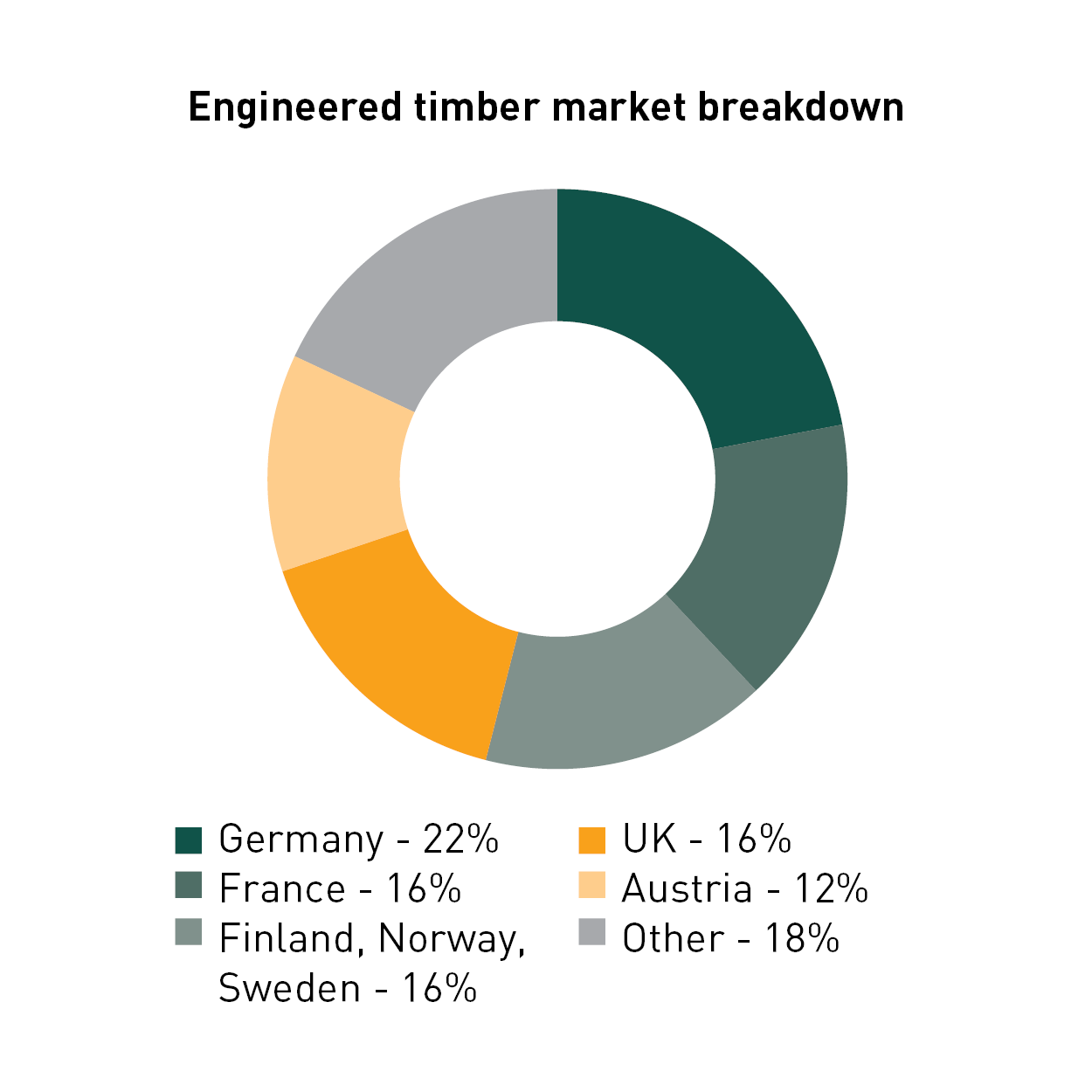
The engineered timber market in Europe is concentrated, with the top five markets comprising more than 80% of activity. Germany is the market leader, accounting for 22% of construction, followed by France and UK, both with 16%, the Nordics (Finland, Norway, Sweden) collectively account for another 16% and then Austria with 12%.


Conclusion

The ongoing development of timber-based construction creates an attractive and expanding investment opportunity. Whilst these developments broadly maintain all the well-established features of a real asset in terms of return and risk, they also provide additional sustainability benefits.

Engineered timber buildings are also often perceived as superior by the people living or working in them. There are several studies which reference the health benefits of timber looking at both measured and perceived indoor environment quality. There is also evidence of human health and wellbeing benefits based on wood’s biophilic properties, according to Dasos Capital.

These benefits will help drive greater tenant retention and income resilience, as buildings increasingly need to reflect the ethos of the brands that operate within them. Perhaps more importantly to remain ‘investable’, the buildings must be able to demonstrate their sustainability credentials in order to maintain their value over the investment and asset lifecycle.


Our ongoing commitment to ESG

Cromwell has formalised an ESG Strategy for our global business. This strategy includes targets that are crucial to our future, including decarbonising our business toward net zero and setting new baselines for areas – such as energy consumption, waste management, and carbon in each of our operating regions. We have also developed region specific targets to ensure we are addressing local concerns, such as the development and registration of an Australian Reconciliation Action Plan, with further progress and meaningful reflection occurring constantly.